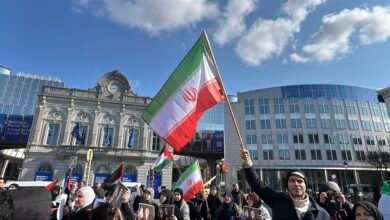
War Against Iran: The Middle East at a New Historic Turning Point
For the European Union, the situation is also extremely complex.


War Against Iran: The Middle East at a New Historic Turning Point
The Middle East is once again standing at a dangerous turning point in history. Military actions by the United States and Israel against Iran have pushed the entire region into the vortex of war. Within just a few days of the conflict, the situation has become so complex that global powers, energy markets, the world economy, and international diplomacy are all feeling its effects.
The ongoing war against Iran has now entered its seventh day, during which missile attacks, drone operations, and aerial bombardments continue. Iran has launched multiple waves of missiles and drones against Israel, while the United States and Israel have targeted military installations, missile centers, and strategic sites inside Iran.
In the early days of the war alone, thousands of people have already been displaced, and the number of casualties continues to rise. Alongside the humanitarian crisis, international organizations are expressing concern that if the war spreads further, it could engulf the entire Middle East.
This war is not merely a traditional military confrontation between two countries; behind it lies decades of geopolitical and political rivalry. Hostility between Iran and Israel is nothing new, but this time the situation has become more dangerous because the United States appears to be directly involved in the war.
In American politics, Iran has always been a sensitive issue. Washington has long viewed Iran’s nuclear program and its regional influence as a threat to its interests. On the other hand, Iran presents itself as a force of resistance in the region and considers Israel its greatest adversary.
One of the most significant features of this war is that it has not remained limited to Iran and Israel. Various armed groups present in Iraq, Syria, Lebanon, and the Gulf region are also increasingly becoming part of this conflict. If this trend continues, the war could easily turn into a large-scale regional war.
The greatest impact of this situation could fall on the global economy. The Middle East is the center of the world’s energy supply, and if oil transportation is affected due to the war, its effects will be felt across Europe, Asia, and the United States. The Strait of Hormuz, in particular, is a strategic location through which a large portion of the world’s oil passes. If tensions increase there, a global energy crisis could emerge.
For the European Union, the situation is also extremely complex. On one hand, Europe is an ally of the United States, and on the other hand, it seeks stability in the Middle East because any major conflict could trigger a new refugee crisis. After the war in Ukraine, Europe is already facing economic and energy pressures.
The greatest concern regarding this war is nuclear weapons. Although no side has yet announced the use of nuclear weapons, global experts are warning that if the war intensifies, this risk could increase.
This war will not be easy for the United States either. After the long wars in Afghanistan and Iraq, there is fatigue among the American public regarding foreign military interventions. If the war against Iran becomes prolonged, its political and economic effects could also be felt within the United States.
Iran also possesses an extensive missile program and a network of allied groups across the region. This is why many defense experts say that a full-scale war against Iran could push the entire region toward instability.
The history of the Middle East teaches us that wars that begin here often become prolonged and complex. The Iraq War, the Syrian civil war, and the conflict in Yemen are clear examples of this. Therefore, it is difficult to say with certainty what the future of the current war against Iran will be.
In this entire situation, the importance of diplomacy has increased more than ever before. If global powers do not immediately attempt negotiations and a ceasefire, this war could turn into a major crisis not only for the region but for the entire world.
The future of the Middle East will depend on whether global leadership succeeds in resolving this conflict through diplomatic means or not. If it fails, the coming months could prove extremely uncertain and dangerous for the world.